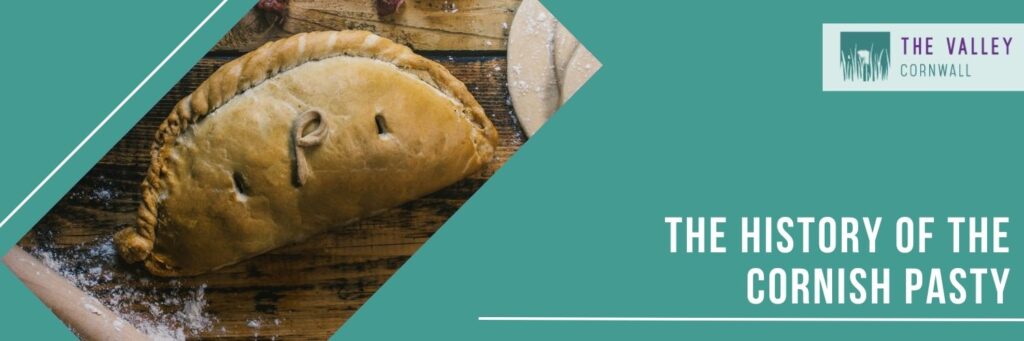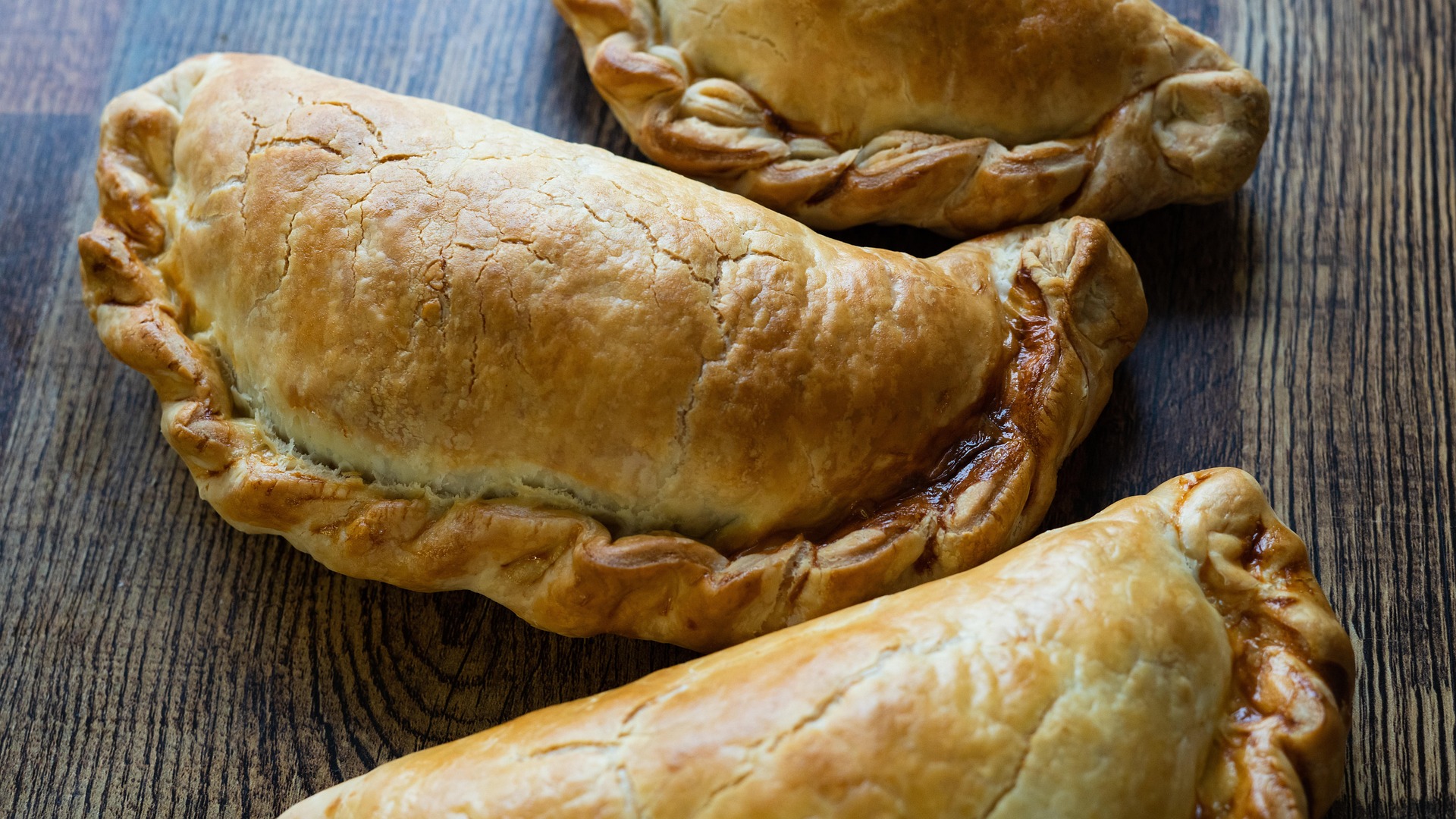
Cornwall is renowned for their famous pasty, and they can be found almost everywhere you go within the county. Each year, pasties contribute around £300 million worth of trade for the Cornish economy, making these baked goods one of the most important parts of life in Cornwall and a must-try for anyone staying at our Truro holiday cottages.
If you are somehow unaware, a Cornish pasty is a turnover pastry traditionally filled with swede, potato and onion, alongside chunks of beef. Each ingredient goes into the pasty uncooked, allowing all of the flavours to cook together and form its own gravy. To be officially considered a Cornish pasty, there must be 12.5% meat and 25% vegetables, with the rest being shortcrust or puff pastry.
We take a look at some facts and faux pas associated with these traditional treats.
Cornish Pasties Have to Be Made in Cornwall
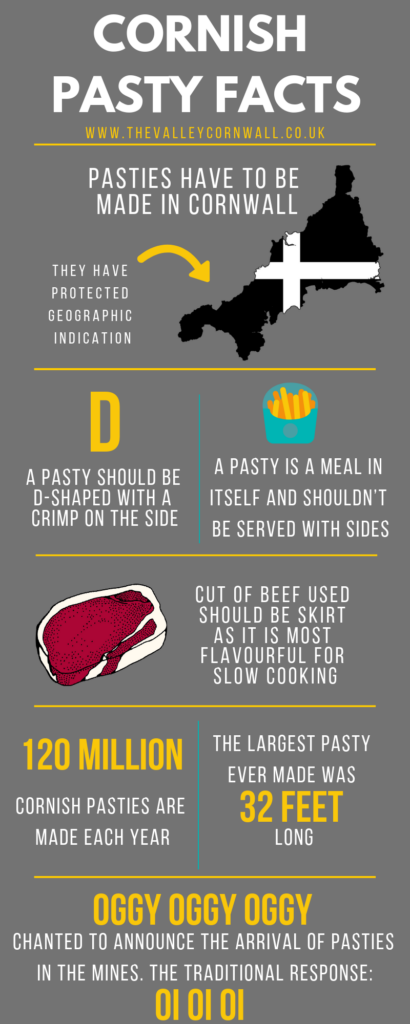
Since 2011, the traditional Cornish pasty has had Protected Geographical Indication (PGI) status in Europe. Alongside products like Gouda from Holland and Bordeaux wine, this means it can only be recognised as Cornish if it is produced in the county.
Beyond its location, a Cornish pasty also has to follow strict rules around its creation to earn its name, including ingredients of beef, turnip, potato and onion and its iconic D shape. Other popular styles of pasty, such as steak and ale, can’t be called Cornish even if they’re made here.
Cornish Pasties Must Be D-Shaped
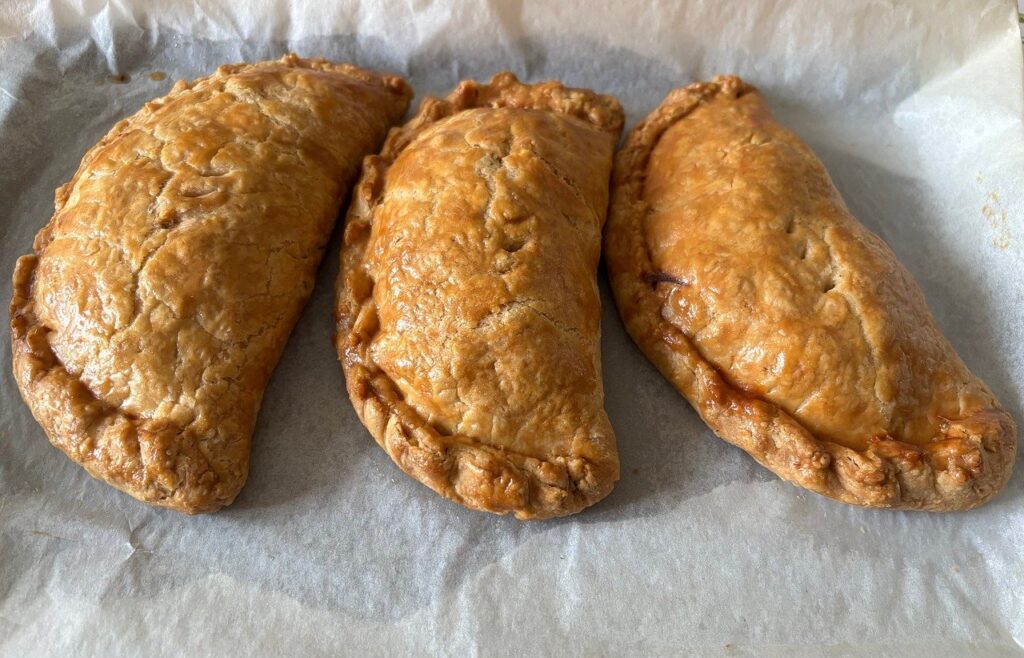
As mentioned, to officially be called a Cornish pasty, it must be side-crimped, creating the famous D shape.
The traditional story suggests that the thick side-crimp on a Cornish pasty was due to its popularity with miners, who could hold it while eating the pasty and then throw it away. However, pasties were already popular in the region before the mining booms of the 18th and 19th centuries which put Cornish pasties on the map, so this might not be the case.
Some records suggest Cornish pasties were originally top-crimped, with the pastry folded to meet at the top. However, that style is now more associated with our neighbours in Devon.
Pasties Should Never Be Served With Sides
No matter how you crimp your pasty, one thing we can all agree on is that you should never have a pasty on a plate, and especially not with a side of chips or salad.
The main reason why pasties were so popular with miners was less the crimping protecting from their grubby fingers and more that pasties represented a complete meal. That’s why the recipe includes both meat and vegetables.
To have a pasty with a side defeats its very purpose! Cornish pasties are often much more filling than their size suggests, so you shouldn’t find yourself needing anything with them.
Beef Skirt Makes the Best Pasties
One thing many people don’t realise about Cornish pasties is that they are cooked raw. Unlike modern pastries that often use cooked meats, everything in a pasty is slow-cooked in the pastry, which creates its incredibly succulent and juicy flavour.
Almost everyone agrees that when it comes to the meat, you can’t do better than a bit of Cornish-raised beef skirt. Famous for its tenderness and deep flavour when slow-cooked, it’s perfect for dicing and allowing to marinate in a carefully-prepped Cornish pasty.
Millions of Cornish Pasties are Made Every Year
According to the Cornish Pasty Association, at least 120 million Cornish pasties are made each year. Pasties can be found in every town and village, and many people come from far and wide to try one of Cornwall’s most famous features.
As a result, it’s estimated that the Cornish pasty industry provides around £300m to the local economy. It also provides at least 2,000 full-time jobs in the county, vital when many of Cornwall’s jobs are seasonal or tourism-dependent.
The Largest Pasty Ever Made
There are a few different claims as to the largest pasty ever made. Guinness World Records credits Proper Cornish with the largest from 2010, weighing over 1,600 pounds. However, there are reports of a Young Farmers group in 1985 who made one that was 32 feet long! Maybe both records will be surpassed one day?
The Pasty is Responsible for Oggy, Oggy, Oggy
It’s a famous chant heard across the world, particularly at sporting events: “Oggy Oggy Oggy! Oi Oi Oi!” It’s also something that the world can thank Cornish pasties for creating!
Oggy is believed to derive from ‘hogen’, the Cornish word for pasty. Back in the day, miners’ wives would bake the pasties and shout “Oggy Oggy Oggy” down the shafts when they were ready, which would be met with “Oi Oi Oi” by hungry miners.
While Cornish pasties are enjoyed across the world, if you’d like to discover the real taste, fresh from the oven of a Cornish bakery, then a holiday in Cornwall could be just the thing for you!