
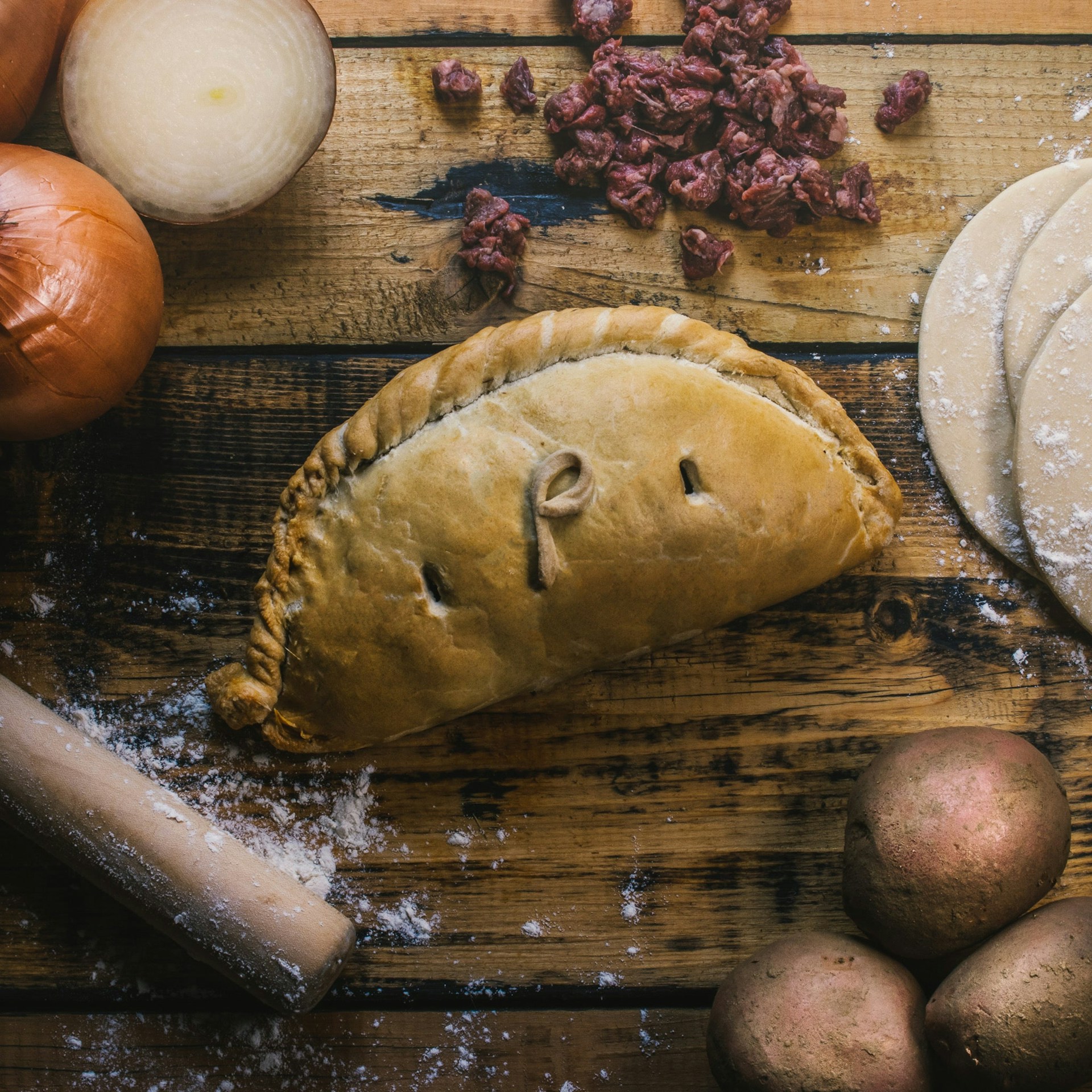
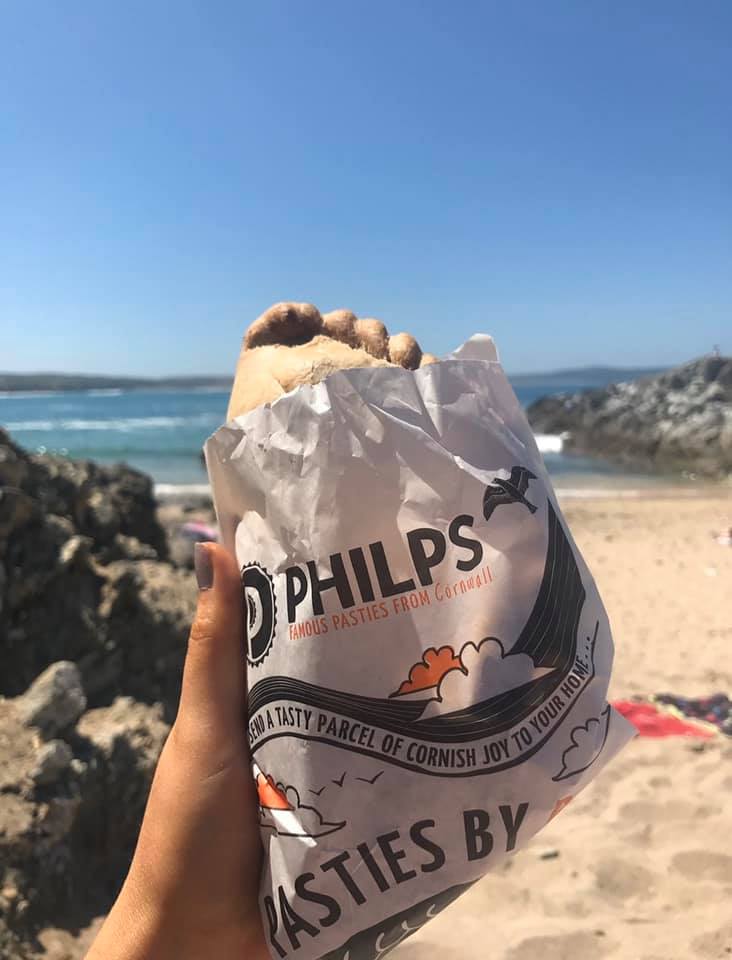
While staying at holiday cottages in Cornwall, you’ll probably find a Cornish pasty between your hands at one point or another. What you might not realise, however, is that the origins of the pasty go back at least eight centuries! Here we give you a brief rundown of what has made the pasty Cornwall’s most treasured food.
A Brief History of the Pasty
Feeling hungry already? Here’s a quick run-down of the Cornish pasty’s history that you can read with one hand while tucking into one with the other!
- The original pasty dates back over 800 years and was enjoyed all over Britain.
- Cornish pasties boomed alongside Cornish mining, when more miners needed high-calorie food they could carry into the mines. This is why Cornish pasties tend to have a thicker pastry.
- The D shape of a Cornish pasty was so that miners could hold the crust while eating the contents and then throw it away to avoid contamination.
- Cornish pasties are responsible for the “oggie, oggie, oggie” chant! Oggy (or oggie) was a Cornish name for the pasty, and this is what women would shout down the mines when they were ready to eat.
- Cornish pasties are now regionally protected. To officially be called a Cornish pasty, it must be made in Cornwall along specific guidelines regarding shape and contents.
Who Invented the Pasty?
Although it is widely believed that we can thank the wives of the Cornish miners for the wonderful invention that is the pasty, its origins do, in fact, date back at least 800 years. First documented in the 13th Century, under the reign of Henry III, bakers in Norwich were accused of reheating three-day-old pasties and selling them on to make a profit.
Pasties then continued to cause a bit more trouble for the pastry-makers. In 1350, a ban was put in place in London to prevent shops from selling their rabbit and pastry concoctions for more than a penny! Despite these pasties being assembled a little differently than how you would expect today, it did allow people to discover that meat could be wrapped up inside the pastry this way.
The Influence of Cornish Mining On Our Pasties
It wasn’t until the 19th Century that the Cornish pasty that we all know and love first became recognisable to us. After the third mining boom in the 18th century, the Cornish mining industry was flourishing. Some of the areas, such as Gwennap and St Day, were among the richest in the world and, at its height, the tin mining industry in Cornwall owned around 600 steam engines.
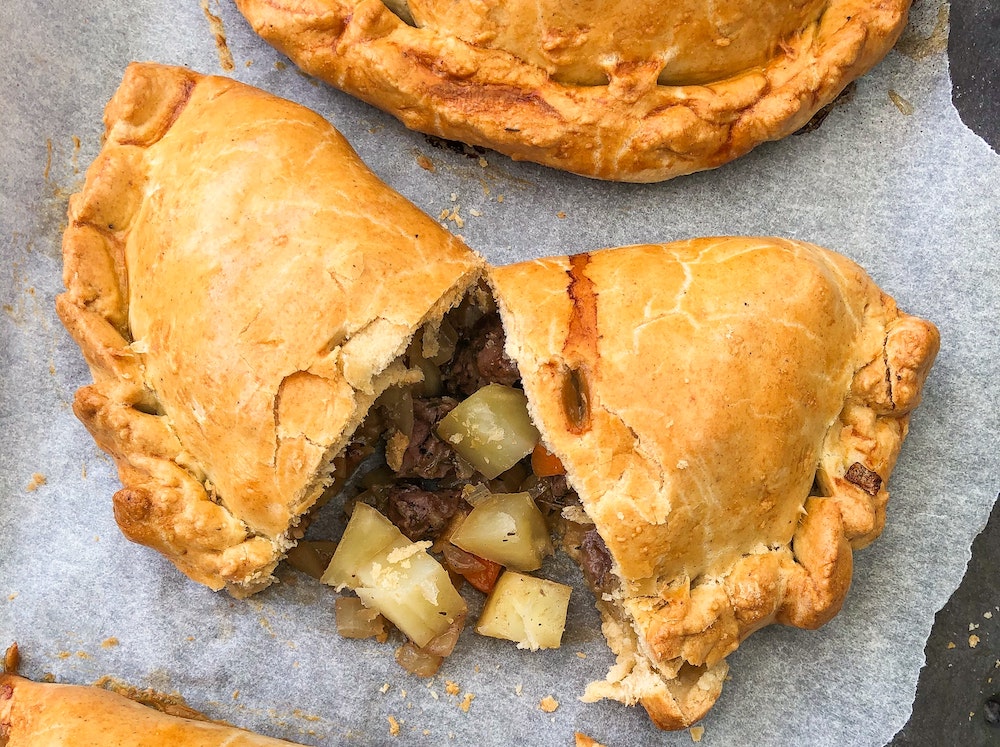
Men going into the mines needed a transportable, yet filling, lunch option that they could take with them. Known as the first convenience food, early pasties would often consist of a potato and vegetable filling. The mixture placed in the middle of the pastry would be made very cheaply, but would be highly calorific to provide the miners with the energy that they needed to get through the day.
How Cornish Pasties Got Their Famous D-Shape
Cornish Pasties were built to perfectly suit the miners. A thicker pastry casing in a curved shape made it easy for people to carry with them. Alongside this, wives could customise the outer pastie shell by engraving family members’ initials into the crust with a toothpick to ensure that they were eating the right one.
Besides it being a perfect handful, it has also been suggested that the ‘D’ shape of the snack allowed miners to hold the crust whilst eating before throwing it away, so as not to contaminate the food with their potentially arsenic-ridden hands. Arsenic was a huge problem for the miners after it was discovered alongside the copper ores at mines such as Callington. In fact, the arsenic issue was so toxic that most people who came into contact with it died before reaching middle age.
Rising Popularity of Pasties
Towards the start of the 20th century, pasties were becoming widespread, produced on an industrial scale for families. Women cooking pasties would shout into the mines “Oggie, oggie, oggie”, receiving a reply of “oi, oi, oi” when the miners were ready to eat. It is because of this that the British traditional rhyme came about, which is still used today.
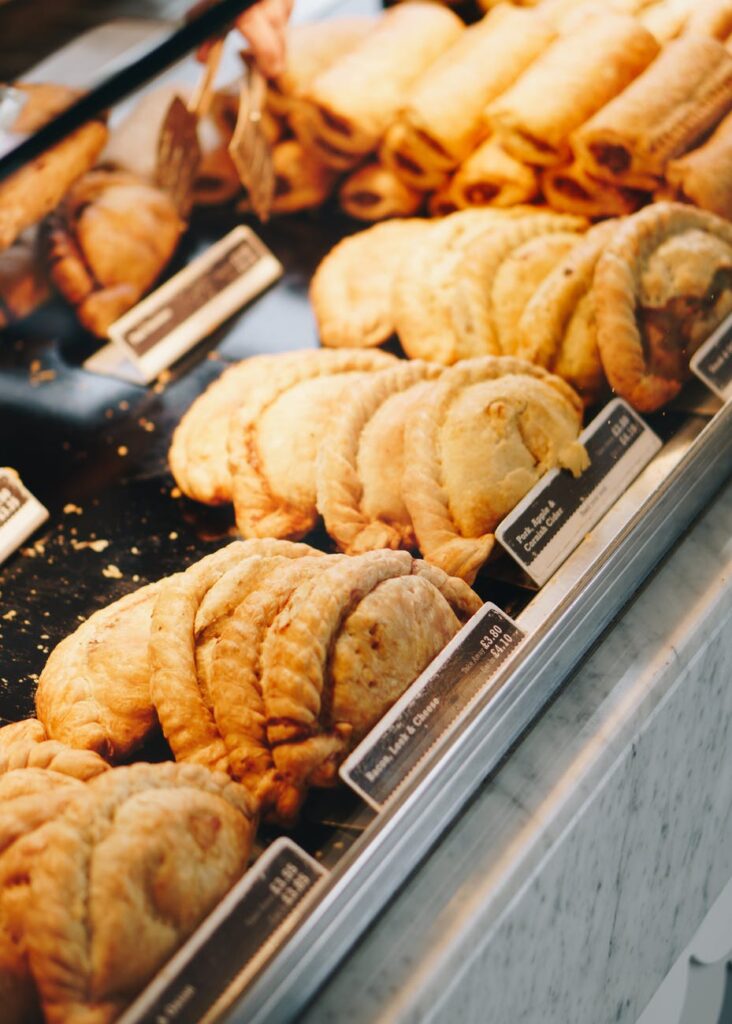
Today, there are a wide variety of flavours available across the country. But don’t worry about it losing its place of origin. The pasty has been registered by the European Union as a Protected Geographical Indication, which means that is is protected due to being a regional food.
What Makes a Pasty Cornish?
The Cornish pasty, or Oggy, is a proud part of Cornwall’s heritage. It’s such a big part of local life that it’s an officially protected food under European law. Just as Roquefort cheese can only be made in France, genuine Cornish pasties can only be made in Cornwall, and even then must use traditional ingredients and methods.
So what should you look for when wanting to get the most authentic Cornish pasty possible? The minimum percentage of meat that a pasty should have is 12.5%, with at least 25% more of the pasty being filled with vegetables. No meat other than beef should be used if you want to have the most authentic experience, and the vegetables used in the filling should not deviate away from the specified mixture of potato, swede and onion.
Another interesting element that goes into the creation of the pasty is that none of the ingredients should be cooked before being placed in the pasty, although it does not matter which pastry is used to form the outer shell.
If you want to learn more about Cornish pasties, then check out our blog on our favourite pasty facts!